
Smyrna Root Zone Calculation for TPZ Fencing Guide
Cobb County Temp Fencing provides precise Root Zone Calculation for TPZ fencing in Smyrna, GA. Serving neighborhoods like Smyrna Market Village and Bellmont Hills, we ensure compliance with local regulations tailored to the area's historic housing and climate. Our expertise helps protect critical root zones near landmarks such as the 20th Century Veterans Memorial while supporting construction projects with accurate TPZ fencing calculations.
Root Zone Calculation for TPZ Fencing in Smyrna, GA
We get it up fast, so you can get back to business, but we don’t guess on root zone math. On a TPZ job, I start by checking trunk diameter, canopy spread, and the ordinance notes that govern the site. Around Smyrna Market Village, Bellmont Hills, and Williams Park, we’ve had tight lots where a few feet made the difference between a clean inspection and a problem. We set the tree protection zones with enough room for roots, then lock the line with concrete steel bases and zero trip hazard hardware. For windy open ground near Fox Creek Golf Course & Driving Range, we also watch wind load resistance and tree protection ordinances so the fence holds up and stays compliant.
Calculation Steps
- Measure the tree protection zone from the trunk using the arborist’s root spread and any site-specific ordinance limits.
- Place TPZ fencing outside the critical root area and keep panels off exposed roots and grade changes.
- Use tree protection zone panels with stable bases, tight connections, and no trip gaps along pedestrian paths.
- Leave access clear for inspection, watering, and arborist review without cutting through the fenced area.
- Match the fence layout to the site conditions around Smyrna Market Village, Bellmont Hills, or Williams Park before setup.
| Calculation step | What we check | Why it matters |
|---|---|---|
| Trunk measurement | Diameter at breast height and visible flare | Sets the starting point for the TPZ radius |
| Site layout | Walk paths, grading, and nearby work zones | Keeps panels outside roots and traffic lanes |
| Hardware choice | Bases, hooks, and reconfiguration points | Helps the fence stay fixed without root damage |
| Final review | Ordinance notes and arborist instructions | Confirms the enclosure meets the site’s protection plan |
Calculating Root Protection Zones in Smyrna
Root zone calculations for TPZ fencing in Smyrna require measuring from the tree trunk to the drip line, then adding a 2-foot buffer for equipment clearance. In Bellmont Hills, this often means 15-20 foot radii around mature oaks. For Williams Park's historic magnolias, account for surface roots extending beyond the canopy. Use non-invasive bases to avoid soil compaction near Rose Garden's specimen trees. Always verify with Cobb County's arborist for variances near Smyrna Market Village construction sites.
Key Terminology
- TPZ
- Protected area around tree roots
- Drip line
- Outer edge of tree canopy
- Root flare
- Base where trunk meets roots
- Soil compaction
- Compression harming root systems
- Critical root zone
- Area requiring protection fencing
- Village Green
- Smyrna landmark with mature trees
In Simple Terms
Measure from trunk to drip line, then add buffer for equipment clearance.
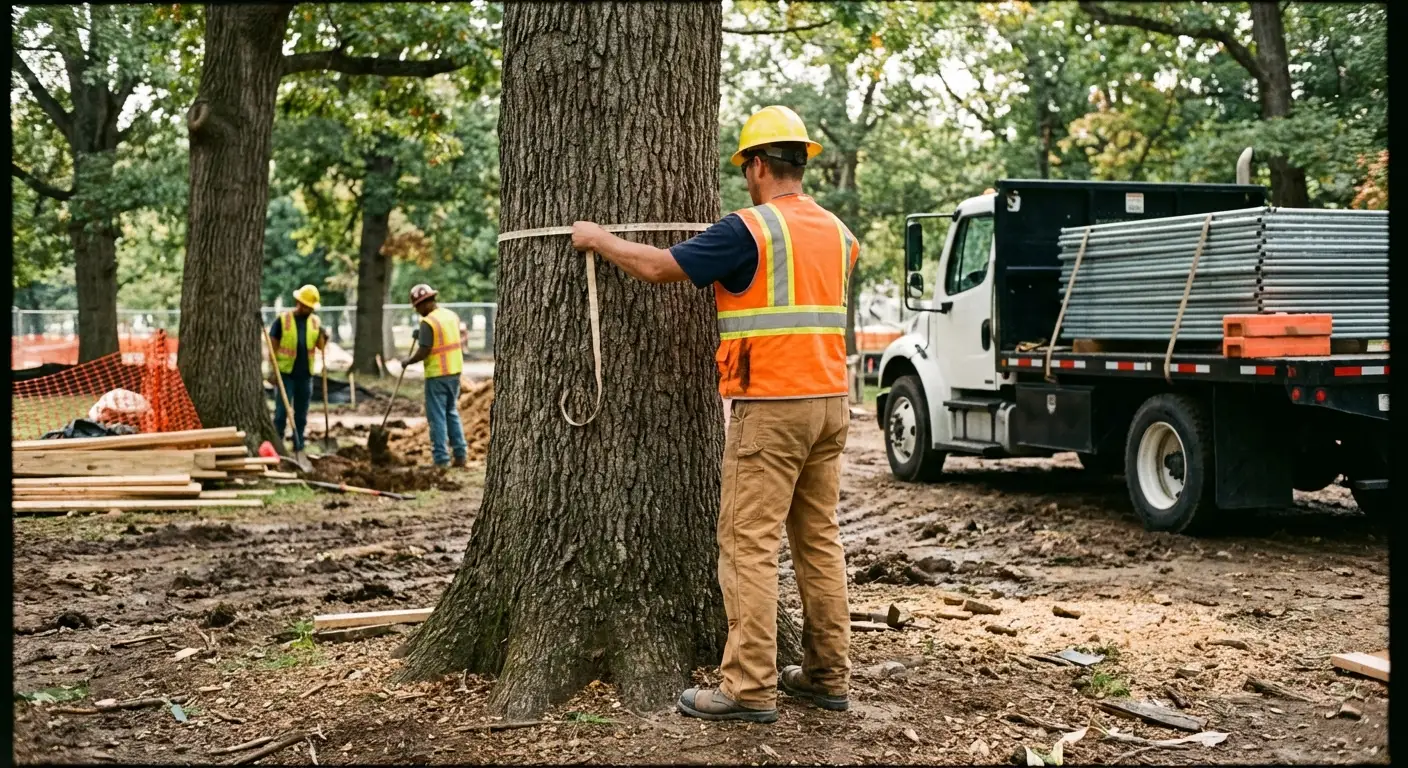
Root Zone Calculation for TPZ Fencing: Compliance Guide
Guidelines for calculating root zones ensure TPZ fencing installation meets Smyrna, GA regulations.
| Root Zone Depth | Minimum 18 inches below grade to protect TPZ fencing posts |
|---|---|
| Soil Type Assessment | Conduct soil analysis in Bellmont Hills for optimal fence stability |
| Fence Post Spacing | Posts spaced 6-8 feet apart to comply with local structural codes |
| Root Zone Protection Radius | Maintain a 3-foot radius around trees in Williams Park to prevent damage |
| Trenching Requirements | Trenches must avoid root zones in Rose Garden historic areas |
| Compliance Cost Range | $200-$600 per week depending on site complexity and neighborhood |
| Signage Interval | Every 30 linear feet |
TPZ Fencing Compliance in Smyrna
Contact Cobb County Temp Fencing for root zone calculations.
Common Mistakes in Root Zone Calculation for TPZ Fencing
Root zone calculations for TPZ fencing often get overlooked or botched, leading to compliance headaches. In Smyrna's varied neighborhoods like Rose Garden and Willams Park, we’ve seen firsthand how these errors cause delays and damage.
Ignoring Tree Species and Root Spread Variability
Failing to account for different tree species’ root structures risks damaging critical roots, leading to tree decline or death and potential violation of local tree protection ordinances.
Assess the specific tree species and map root zones carefully before fencing placement to protect vital roots and stay compliant.
Using Fixed Distance Measurements Instead of Calculated TPZ Radii
Applying generic distances rather than calculating tree protection zones per species and size can result in insufficient protection, exposing roots to harm and triggering regulatory fines.
Calculate root zone radius based on trunk diameter and species-specific guidelines for accurate TPZ fencing boundaries.
Installing Fencing Too Close to Tree Trunks
Placing temporary fencing too near trunks damages roots and bark, which compromises tree health and violates Smyrna’s tree protection rules, especially in older neighborhoods with protected trees.
Maintain proper clearance by following calculated root zone distances and using measured fencing setbacks from the trunk.
Neglecting Existing Site Conditions Like Soil Compaction
Ignoring soil conditions when calculating root zones allows heavy equipment or fencing installation to compact soil, suffocating roots and causing long-term tree stress or failure.
Incorporate soil condition assessments in root zone planning and use protective mats or avoid heavy machinery near the TPZ.
Failing to Coordinate With Local Ordinances and Permits
Overlooking Smyrna’s specific tree protection ordinance requirements leads to non-compliance, project delays, and costly rework when fencing is improperly sited around protected trees.
Consult local Smyrna regulations and secure necessary permits before calculating and installing TPZ fencing.
Root Zone Calculation for TPZ Fencing: Compliance Guide — Part 2
We believe tree protection fencing should defend both the tree and the project timeline. Root zone calculations aren’t just about measurements—they’re about understanding Smyrna’s soil, weather history, and neighborhood character. Since 2005, we’ve treated every TPZ install as a balance between regulatory compliance and practical field realities, so your site stays secure without delays or violations.
-
Root Zone Integrity First
We calculate root zones based on Smyrna’s soil composition and tree species to avoid damaging protected roots during TPZ fence installation. This ensures compliance with local arborist guidelines and prevents future site violations or tree health issues.In PracticeAt Williams Park, we mapped a mature oak’s dripline before placing bases outside the critical root zone.
-
Adaptive Base Placement
Not all ground is equal—especially around historic neighborhoods like Bellmont Hills with older utility lines and shallow roots. We adjust base type and spacing using concrete-steel bases only where soil stability allows.In PracticeIn Smyrna Market Village, we used compact steel bases near sidewalks to avoid underground infrastructure.
-
Storm-Ready Configuration
Drawing from Mac’s 2004 storm experience, we integrate wind-load resistance into every TPZ layout. Panel height, gate placement, and bracing follow OSHA and local wind codes for exposed sites like Concord Lake Park.In PracticeNear Concord Lake Park, we reduced panel spans and added corner bracing for gust-prone zones.
-
Zero Trip, Full Access
TPZ fencing must protect trees without creating hazards for crews or inspectors. Our zero-trip-hazard design keeps bases flush and pathways clear, aligning with both safety standards and Smyrna’s accessibility expectations.In PracticeAt a Craftsman bungalow site in Williams Park, we routed the fence line to maintain ADA-compliant access while shielding roots.
Cobb County Temp Fencing follows OSHA safety standards and Smyrna’s tree protection ordinances, using field-verified root zone methods developed after the 2004 storm season.
TPZ Fencing Root Zone Requirements in Smyrna
Cobb County regulations for temporary fencing near protected trees in Smyrna neighborhoods and commercial areas.
What defines the root zone for TPZ fencing near Willams Park properties?
The root zone extends 1 foot from the trunk for each inch of diameter at breast height, per Cobb County arborist standards in residential zones like Willams Park.
How does TPZ fencing differ around Smyrna Market Village's mature trees?
Downtown trees require double the standard root zone buffer due to shallow utilities under Market Village sidewalks, verified by Smyrna Public Works before installation.
Are there exceptions for TPZ fencing near Bellmont Hills' older homes?
1920s craftsman bungalows in Bellmont Hills may qualify for reduced root zones with documented arborist approval when original construction compromised root systems.
What materials comply with TPZ fencing near Fox Creek Golf Course?
Powder-coated steel posts with removable panels meet Cobb County requirements for commercial areas like Fox Creek, allowing root aeration without permanent ground penetration.
How deep can temporary fence posts go near protected trees in Smyrna?
Posts must stop at 12 inches depth within TPZ areas, measured from the lowest visible root flare, as enforced by Smyrna Urban Forestry Division.
Who verifies TPZ compliance before fencing installation in Cobb County?
A Cobb County-certified arborist must stake root zones and sign off, particularly for properties adjacent to Willams Park's designated heritage trees.
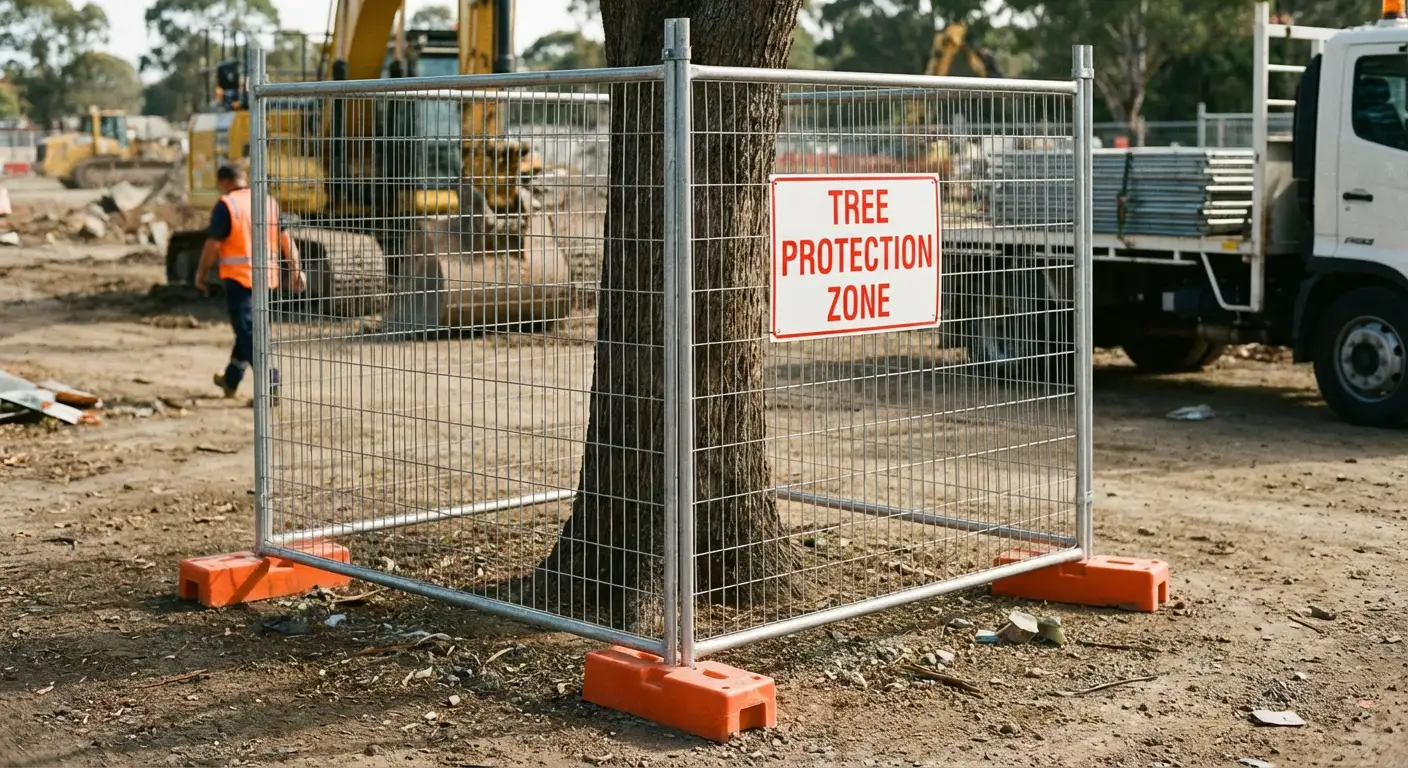
Root Zone Calculation for Temporary Fencing Safety
Technical guide for precise TPZ fencing perimeter measurements ensuring regulatory compliance in construction and industrial zones.
Certified fencing professionals serving metropolitan Atlanta construction industry standards